
Tracking Athlete Social Media Activity and Its Ties to Rapid Prop Line Adjustments Across Competing Operators
Operators across the betting industry monitor athlete social media accounts to detect early signals that influence player prop lines, and these observations often lead to swift adjustments that vary in timing and magnitude from one platform to another. Research indicates that posts containing indirect references to physical condition, travel fatigue, or practice participation can prompt line movements within minutes when multiple books receive the same alert feeds from monitoring services.
Monitoring Practices and Data Sources
Specialized analytics firms compile real-time scans of verified athlete accounts along with secondary mentions from teammates and family members, then distribute parsed alerts to subscribing operators. Data shows these services flag keywords related to soreness, rest days, and equipment changes, which in turn feed into automated pricing models that recalculate implied probabilities for individual performance metrics. Observers note that platforms with direct API connections to these feeds tend to move lines ahead of those relying on manual review, creating staggered adjustment windows across competing sites.
By July 2026, industry reports documented an increase in the volume of monitored accounts as leagues expanded their social media policies, yet the core workflow remained consistent. Analysts at major operators receive categorized alerts that separate high-confidence signals, such as a player posting about missing a morning shootaround, from lower-confidence noise like generic motivational content. Those alerts trigger immediate reviews of current prop offerings, and books that integrate the data into live pricing engines execute changes faster than competitors still using spreadsheet-based processes.
Line Movement Patterns Across Operators
Studies from university research centers have examined how the same social media event produces different adjustment speeds at various books. One analysis of 2025 NBA prop markets found that platforms using automated alert ingestion adjusted over/under lines on points scored an average of 47 seconds after an alert, while others required between four and nine minutes to complete manual verification steps. The variation creates brief windows where bettors who receive faster notifications can place wagers before all books converge on similar numbers.
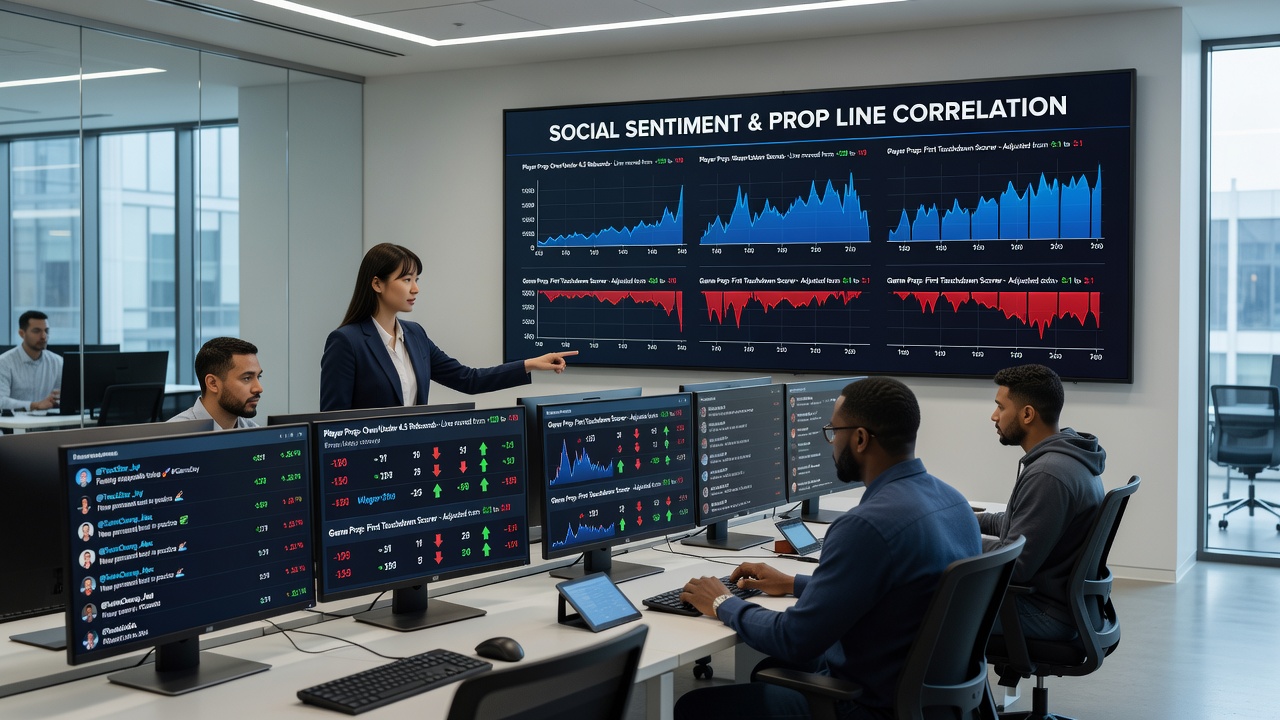
What's notable is the geographic spread of these timing differences. Operators licensed in jurisdictions with strict real-time reporting requirements, such as those overseen by the Nevada Gaming Control Board, often document adjustment rationales that explicitly reference social media inputs. In contrast, platforms operating under frameworks from the Australian Communications and Media Authority apply additional compliance checks that can delay final line changes even when the underlying data arrives simultaneously. University of Nevada Las Vegas gaming research has tracked these discrepancies across dozens of events, revealing consistent patterns tied to each operator's technology stack rather than to the content of the posts themselves.
Case Examples of Social Signals and Adjustments
Take one documented sequence during the 2025 NFL season in which a running back posted a photo of an ice pack on his knee late on a Friday evening. Monitoring services flagged the image within eight minutes, and three major operators lowered the player's rushing yard prop by 12 yards within the next 90 seconds while two others waited until the following morning to implement comparable shifts. Similar sequences have appeared in MLB and NHL markets, where pitchers and goalies posting about equipment adjustments or recovery routines have preceded rapid total-based prop movements at the fastest-moving books.
Researchers at the Canadian Centre for Gaming Research compiled a dataset of 312 such incidents and found that 68 percent of initial line changes occurred at operators using machine-learning models trained on historical social media correlations. Those models assign confidence scores to each alert and execute tiered adjustments, whereas legacy systems route alerts to human traders who must cross-reference multiple sources before approving changes. The resulting lag creates measurable divergence in offered odds during the first several minutes after a post appears.
Regulatory and Integrity Considerations
Regulatory bodies in multiple jurisdictions require operators to maintain records of factors influencing line changes, including any reliance on non-public information sources. Social media posts by athletes fall into a gray area because the information is publicly available yet requires systematic scraping and interpretation to become actionable. Canadian Gaming Association compliance guidelines emphasize documentation of data sources and timing, which has encouraged operators to standardize alert logging procedures. These requirements have not eliminated timing differences across books but have increased transparency around the process.
Conclusion
The connection between athlete social media activity and prop line adjustments continues to evolve as monitoring technology improves and regulatory expectations shift. Operators that integrate automated alert systems consistently demonstrate faster response times than those dependent on manual processes, and the resulting disparities in line movement create observable differences across competing platforms. Data from multiple research institutions shows these patterns persist across leagues and seasons, driven by variations in technology adoption and compliance frameworks rather than by the specific content of individual posts.