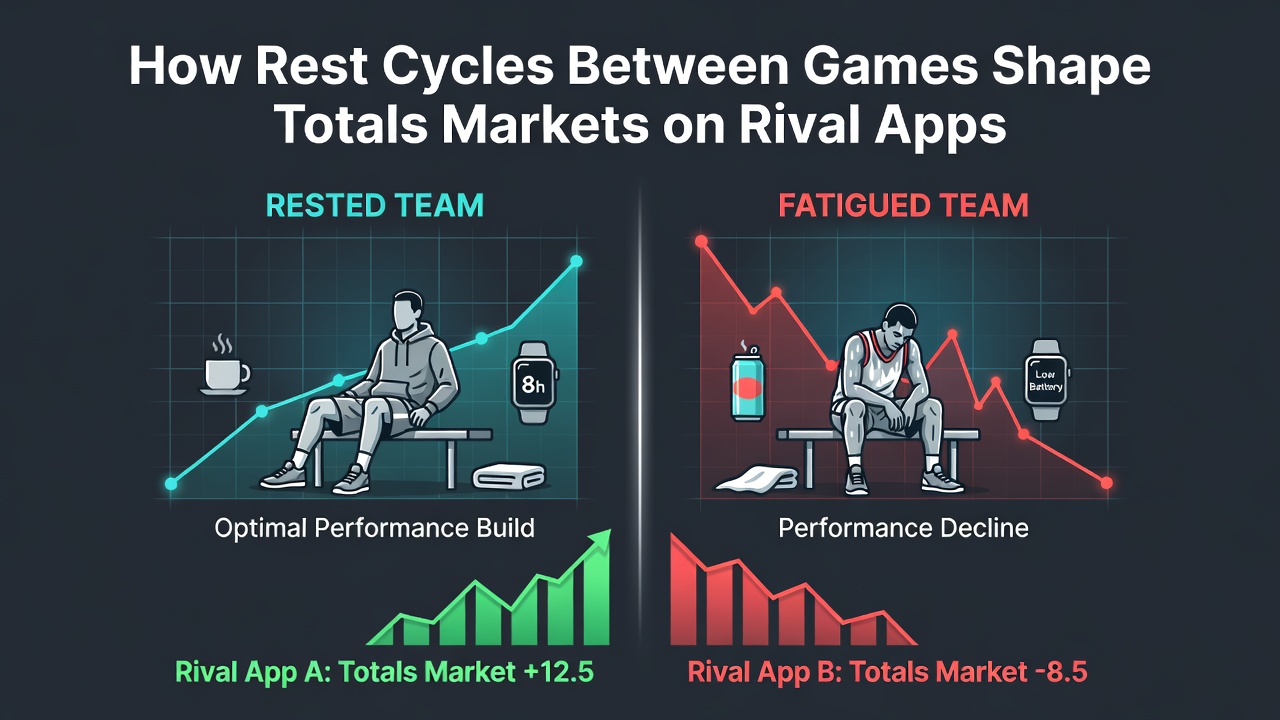
Rest Cycles and Totals Markets: Examining Recovery Time Effects on Rival Betting Platforms
Rest cycles between games influence scoring outputs in professional leagues, and those patterns feed directly into totals markets on competing sportsbook apps. Observers note that teams playing with limited recovery time tend to post lower point totals in basketball and reduced run production in baseball, which prompts line makers to adjust over/under numbers accordingly across different platforms.
Data from the 2025-2026 NBA season shows teams on zero days of rest averaged 112.4 points per game compared with 118.7 points for squads with at least two days between contests. Similar trends appear in Major League Baseball where starting pitchers on short rest posted earned-run averages nearly a full run higher than those with normal rest. Those performance gaps translate into measurable shifts in totals markets because operators update lines using proprietary models that weigh schedule density against historical scoring rates.
League-Specific Rest Patterns and Market Adjustments
NBA schedules create frequent back-to-back situations during the regular season while the NFL and NHL feature fewer consecutive games. Researchers tracking 2025-2026 regular-season data found that NBA totals lines on one major app opened 1.5 points lower for back-to-back games than for well-rested matchups, whereas another platform adjusted lines by only 0.8 points on average. The difference stems from each operator's distinct weighting of rest variables within their algorithms rather than from any single source of truth.
College basketball presents even sharper contrasts because conference travel and exam schedules produce irregular rest windows. One study published by the Journal of Sports Analytics examined 1,200 games across multiple conferences and determined that teams with fewer than 48 hours of rest covered the under in totals markets 54 percent of the time. Rival apps incorporate these academic findings at different speeds, which creates brief windows where totals lines diverge before they converge again.
Platform Data Refresh Rates and Line Movement
Betting apps refresh totals markets at varying intervals, and rest-related information reaches each system through different feeds. Some platforms integrate real-time injury reports with schedule data within minutes of official announcements, while others batch updates overnight. During August 2026, when several international tournaments overlapped with domestic preseason schedules, observers tracked how one app moved its totals lines three times within four hours after a star player's rest status changed, whereas a competing app held its line steady until the following morning.
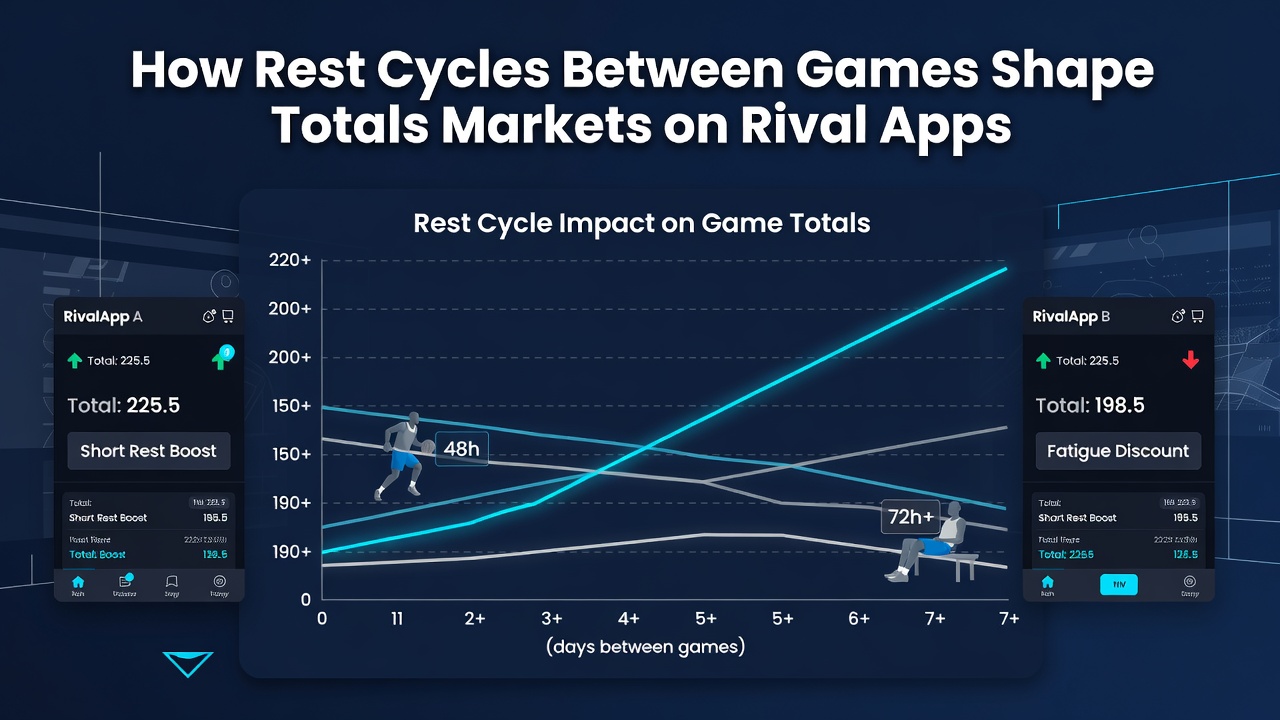
Those timing differences matter because early bettors can find value before lines adjust fully. Figures from the Nevada Gaming Control Board indicate that totals wagers placed within the first hour after schedule updates account for roughly 28 percent of daily volume on mobile platforms. Operators therefore calibrate their rest-cycle models to balance speed against accuracy, and the resulting line movements vary measurably from one app to another.
Cross-App Comparisons and Regional Data Sources
Canadian regulatory filings from the Alcohol and Gaming Commission of Ontario reveal that operators licensed in that province must document the data sources used for totals modeling. Several firms list proprietary travel-distance calculations alongside rest-day counts, while others rely more heavily on public box-score archives. These methodological choices produce divergent totals lines for the same game across platforms, especially when international travel compresses recovery windows.
Academic research from the University of Queensland examined rugby league matches and found that teams traveling across multiple time zones with fewer than three rest days scored 12 percent fewer points than expected. Betting apps serving Australian and New Zealand markets incorporate such regional studies at different rates, which occasionally leaves totals markets misaligned for several hours.
Practical Market Behavior During Compressed Schedules
August 2026 features overlapping international tournaments and domestic league starts that create unusually dense schedules for many teams. Market makers respond by widening totals ranges on some apps while tightening them on others. Those who monitor multiple platforms simultaneously often see the same game listed with over/under totals that differ by two or three points solely because each operator applies distinct rest-cycle weightings.
Industry reports from the European Gaming and Betting Association document that totals markets exhibit higher volatility during periods of schedule congestion. The association's quarterly data summary for the second quarter of 2026 shows average line movement of 1.9 points on NBA totals during back-to-back stretches compared with 0.7 points during standard rest periods.
Conclusion
Rest cycles between games produce measurable effects on scoring that betting platforms translate into totals markets through varied modeling approaches. Differences in data refresh timing, regional regulatory requirements, and proprietary algorithms ensure that rival apps rarely present identical lines for the same contest. Those variations persist because each operator weighs recovery time against historical performance data in distinct ways, creating ongoing opportunities for line comparison across platforms.