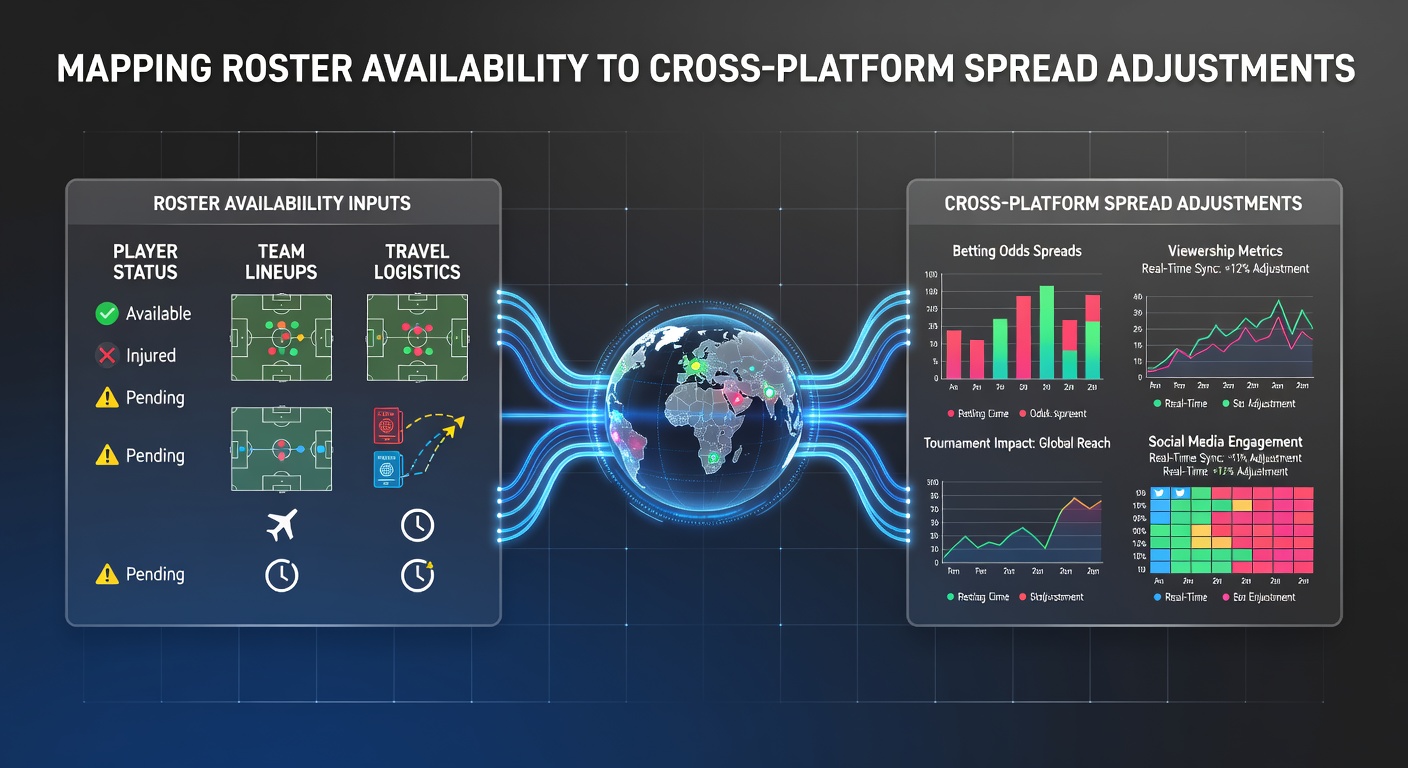
Mapping Roster Availability Updates to Cross-Platform Spread Adjustments During International Tournaments
International tournaments create constant movement in roster availability because teams announce injuries, suspensions, and last-minute replacements right up to kickoff, and those changes feed directly into point spread calculations on betting platforms worldwide. Observers note that when a star forward drops out hours before a match the home team spread can shift by half a point or more within minutes on one site while another platform holds steady until its next data refresh cycle completes.
How Roster Changes Reach Betting Markets
Team officials release updated lineups through official channels and media outlets, then data providers scrape those announcements and push them to sportsbooks in batches. Some operators receive feeds every thirty seconds during peak tournament windows while others batch updates every five minutes, which means the same roster news lands at different times across apps. Researchers tracking these patterns during the 2022 FIFA World Cup found that spreads on major platforms diverged by as much as 1.5 points for several minutes after high-profile absences became public.
Bookmakers adjust their internal models by recalculating expected goal differentials or point margins once they confirm a player will miss the match. The adjustment size depends on teh absent athlete's historical contribution, the opponent's defensive strength, and current weather or venue factors. Data from past events shows that a starting goalkeeper missing a knockout match tends to move totals markets faster than spreads because goal expectations shift more dramatically than margin projections.
Cross-Platform Timing Differences
Platforms operating in different jurisdictions maintain separate risk-management teams that interpret the same roster data through distinct lenses. One operator may widen the spread immediately after an official announcement while another waits for confirmation from two independent sources before moving numbers. Those delays create brief windows where bettors see mismatched lines for identical contests.
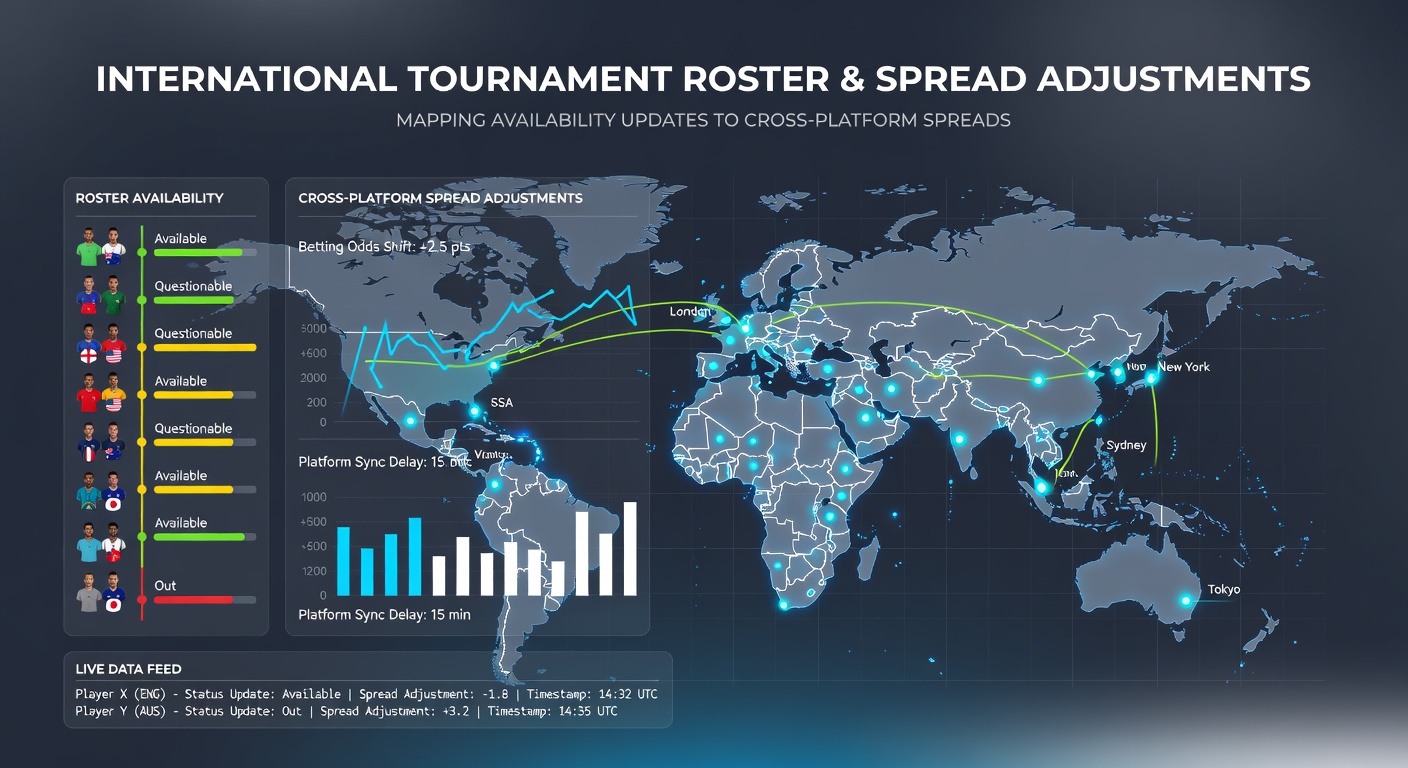
Studies conducted by the University of Nevada Reno's gaming research group tracked line movement during the 2018 and 2022 World Cups and documented that North American books typically adjusted spreads 45 to 90 seconds ahead of European operators when roster news broke during daytime hours in the Americas. The same research noted that Asian-based platforms often lagged further because their primary data pipelines route through regional aggregators rather than direct league feeds.
Patterns Observed in Recent Events
During the 2024 Copa América several teams published revised rosters the morning of matches because of positive COVID tests or muscle strains discovered in warm-ups. Spreads on one major app moved within eight minutes of the announcement while two competing sites held their original numbers for nearly twenty minutes. The resulting gap allowed observers to compare how quickly each platform incorporated identical information.
June 2026 brings the FIFA World Cup to North America with matches scheduled across sixteen venues, and tournament organizers have already signaled they will release injury reports twice daily during the group stage. Those scheduled releases will land at fixed times that coincide with peak betting hours in multiple time zones, creating predictable moments when roster data floods every platform simultaneously.
Technical Factors Behind Spread Recalibration
Algorithmic models used by sportsbooks weight each player's expected performance metrics differently. When a midfielder with high pass-completion rates sits out, the model lowers projected possession time and therefore expected scoring margin. The recalculation happens automatically once the roster flag flips from available to unavailable, yet human traders still review large movements before finalizing limits on those markets.
Some platforms maintain separate models for international tournaments versus domestic leagues because travel fatigue and squad rotation patterns differ. Those tournament-specific models tend to apply larger adjustments when key players are ruled out because historical data shows greater variance in outcomes during condensed schedules.
Conclusion
Roster availability updates flow into betting platforms through staggered data pipelines that produce measurable timing differences in spread adjustments during international tournaments. Those differences arise from refresh frequencies, jurisdictional review processes, and model weighting choices rather than any single coordinated decision. As the 2026 World Cup approaches, the volume of roster-related line movements is expected to increase because daily injury reporting schedules align with global betting peaks across all major operators.