How Broadcast Rights Shifts Alter In-Play Totals Windows Across Operator Apps
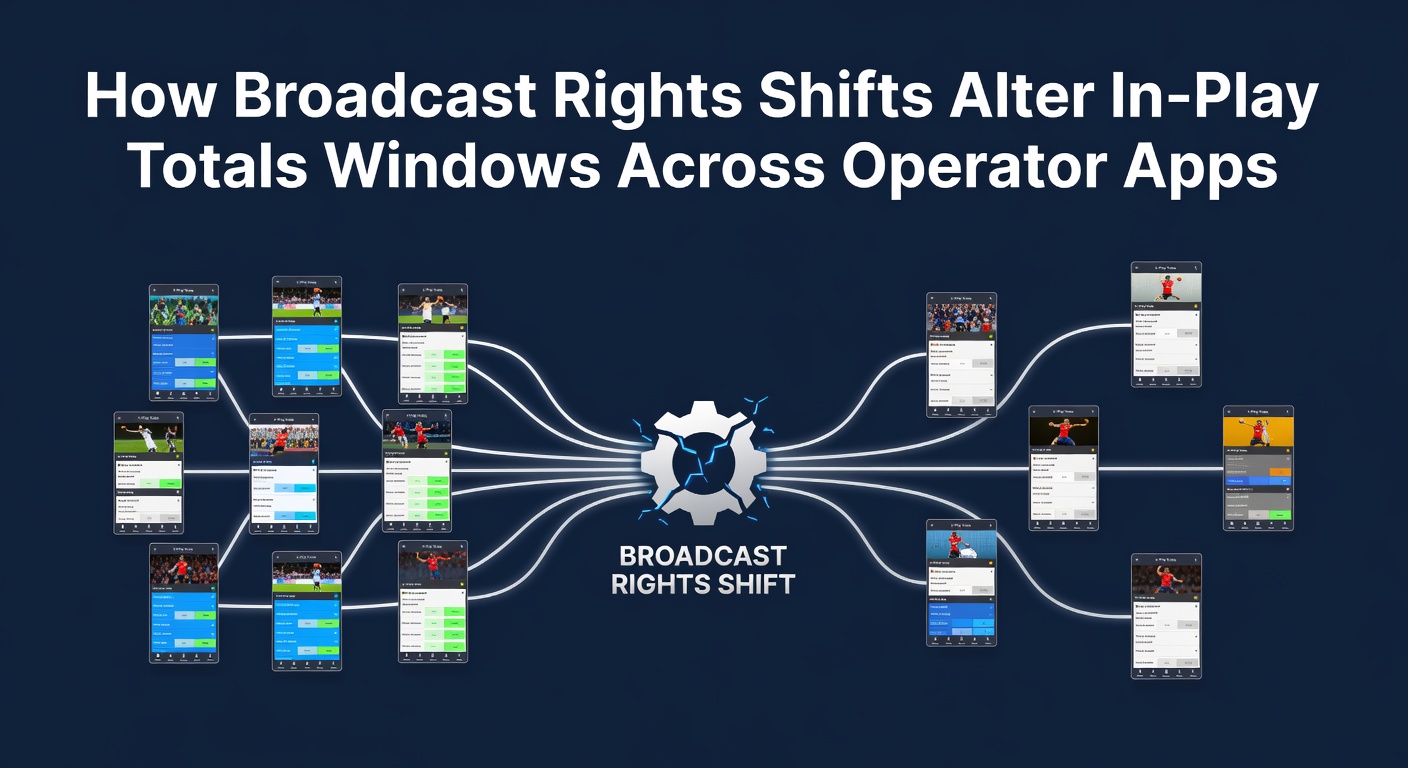
Shifts in broadcast rights create measurable changes in how in-play totals betting windows function across different operator apps because rights holders control the timing and distribution of live data feeds that power odds updates. When a league or event moves from one broadcaster to another, the underlying data latency often changes and that directly affects how quickly totals lines can adjust during live play. Operators receive feeds through partnerships that vary by region and rights package so one app might update over/under markets seconds ahead of competitors when new broadcast agreements take effect.
Data Feed Latency and Rights Transitions
Broadcast rights packages determine which production companies supply the raw statistics that betting platforms rely on for live totals. A transition from traditional television networks to streaming services frequently alters the speed at which play-by-play data reaches operator servers. Research from industry monitoring groups shows that rights changes in major European football leagues during the 2025-2026 cycle produced average delays of 1.8 to 3.4 seconds in certain markets compared with previous seasons. Those delays compress the window operators have to refresh totals lines before significant score changes occur.
Operators that secure direct data agreements with the new rights holder gain earlier access while others depend on secondary redistributors. This creates staggered update times across apps even when the underlying game action remains identical. Observers tracking multiple platforms note that totals markets in basketball and hockey demonstrate the clearest effects because scoring events happen rapidly and small timing differences matter more than in slower-paced sports.
Regional Variations in Operator Response
North American and European operators respond differently to the same rights shift depending on local regulations and existing technology partnerships. In Canada the Canadian Radio-television and Telecommunications Commission oversees certain aspects of sports broadcasting distribution that indirectly influence how quickly operators can incorporate new data sources. Australian operators face separate requirements under the Australian Communications and Media Authority framework which governs how live sports signals reach betting platforms. These regulatory environments shape the technical arrangements operators make after rights change hands.
Take one major soccer league whose domestic rights moved to a new streaming consortium in 2026. Apps operating under Canadian licenses adjusted totals windows an average of 2.1 seconds faster than those under Australian frameworks during the first month of the new deal. The difference stemmed from pre-existing data integration agreements rather than any difference in game action itself. Similar patterns appear when rights for North American college sports shift between networks and direct-to-consumer services.
Impact on Specific Totals Markets
In-play totals for points, goals, and runs all react to broadcast changes but the scale of the effect varies by sport and by the granularity of data the new rights holder provides. Basketball totals markets tend to shift more noticeably because player substitution data and shot location statistics feed directly into algorithmic models. When a rights transition reduces the frequency of these granular updates, operators widen the interval between line adjustments to maintain accuracy. Soccer totals experience smaller but still measurable compression in certain goal-scoring windows after rights move to platforms that prioritize highlight packages over continuous statistical overlays.
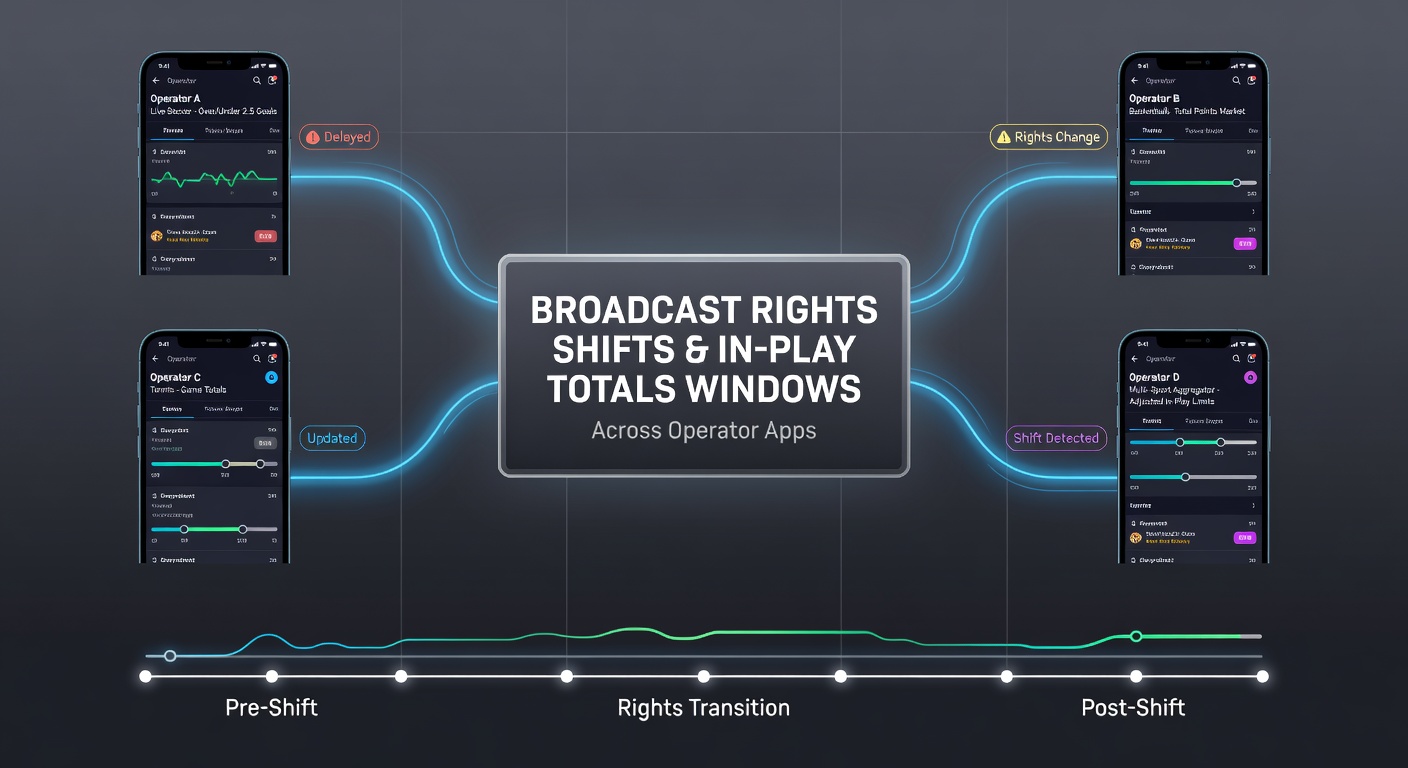
Multiple operators have published technical documentation showing how they recalibrate refresh rates after major rights deals. One documented case from June 2026 involved a North American basketball rights package that altered the cadence of official play-by-play delivery. Apps using the new primary feed narrowed their in-play totals update interval by 0.7 seconds on average while apps relying on legacy redistribution maintained previous intervals for an additional two weeks until secondary agreements were finalized.
Operator App Architecture and Window Adjustments
The technical architecture each operator maintains determines how quickly it can absorb a broadcast rights change. Platforms with modular data ingestion layers reconfigure their totals calculation engines faster than those built around fixed vendor contracts. Data indicates that operators investing in direct rights-holder integrations experience shorter periods of reduced in-play totals availability after transitions. Those relying on aggregated third-party feeds encounter longer stabilization periods that can extend several weeks into a new rights cycle.
League schedules in June 2026 include several rights renewal deadlines that will test these architectural differences. Early indicators from pre-season events suggest that apps with diversified data partnerships maintain more consistent totals windows even when primary broadcast feeds change. Consistency matters because bettors who place live totals wagers often sequence their activity across multiple apps within the same event.
Conclusion
Broadcast rights shifts reshape in-play totals windows by altering the speed and granularity of live data that reaches operator apps. The effects appear consistently across regions and sports although the magnitude depends on regulatory context, technical architecture, and the specific terms of new distribution agreements. Operators that align data partnerships closely with rights holders preserve tighter update intervals while others experience temporary compression. These patterns continue to evolve as additional rights packages transition in 2026 and beyond.