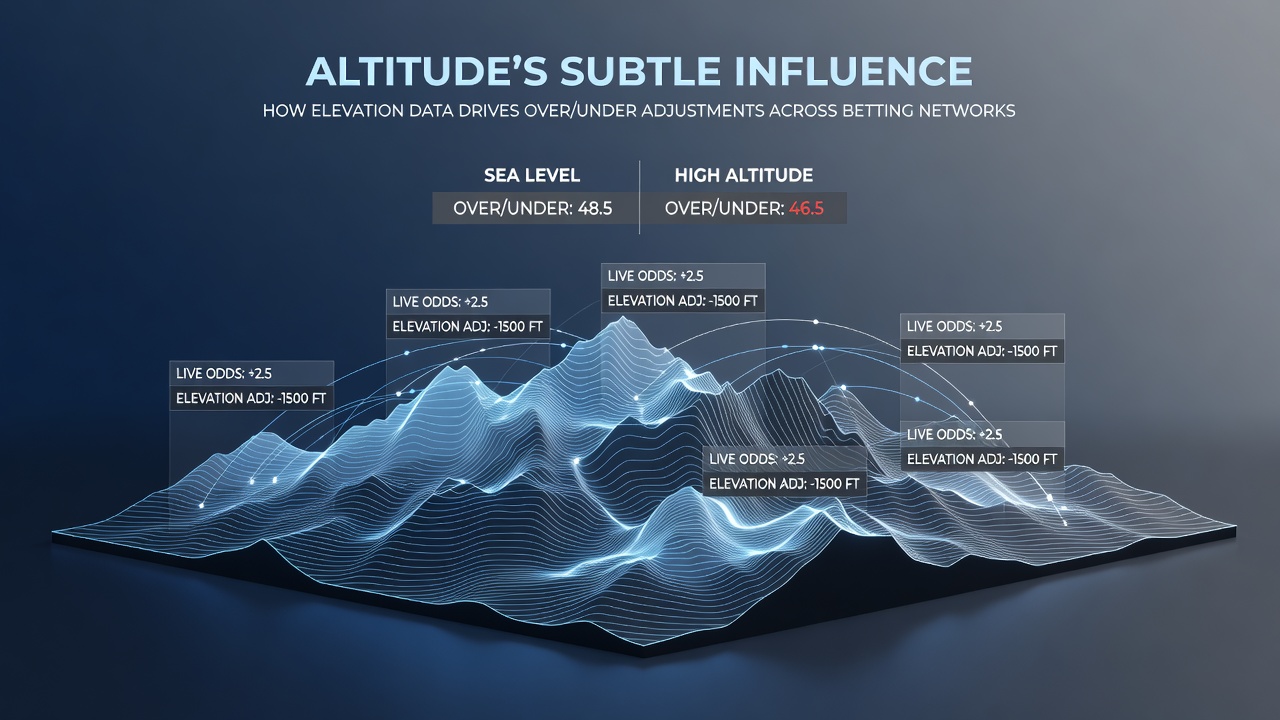
Altitude's Subtle Influence: How Elevation Data Drives Over/Under Adjustments Across Betting Networks
Stadium elevation shapes scoring patterns in ways that extend far beyond casual observation, and betting networks incorporate precise altitude measurements when they set totals lines for baseball, football, soccer and other outdoor sports. Data from thousands of events shows that thinner air at higher elevations reduces drag on balls while it simultaneously increases fatigue for athletes unaccustomed to reduced oxygen levels, and operators adjust over/under thresholds accordingly across multiple platforms.
Physics Behind Elevation Effects
Atmospheric pressure drops roughly one inch of mercury per thousand feet of ascent, which produces measurable changes in projectile motion and player physiology. Researchers at the University of Colorado documented that a baseball travels approximately 10 percent farther at 5,280 feet than at sea level under identical launch conditions, while soccer balls exhibit similar but slightly smaller gains because of their larger surface area. Those physical realities translate directly into higher run totals in baseball and more goals in soccer when games occur at elevated venues.
Betting networks receive automated feeds that combine elevation readings from USGS topographic databases with historical scoring data from each stadium. Algorithms then apply coefficients that raise or lower totals by fractions of a point based on the home team's average altitude and the visiting team's recent exposure to comparable conditions. July 2026 updates to these models incorporated refined humidity variables that further sharpened projections for late-summer contests in the Rocky Mountain region.
Cross-League Examples and Adjustments
Coors Field in Denver sits at 5,280 feet and consistently produces the highest run environment in Major League Baseball, with operators listing totals 1.5 to 2 runs above neutral-site equivalents. In contrast, the same algorithms lower totals for games at Petco Park in San Diego, which rests near sea level and benefits from marine-layer air density. Football follows a parallel pattern: totals at Empower Field at Mile High frequently exceed those at lower-elevation stadiums by three to four points when both teams enter with limited acclimatization time.
International soccer provides additional data points. Estadio Hernando Siles in La Paz, Bolivia, at 11,942 feet, forces totals upward despite smaller pitch dimensions, while matches at Allianz Arena in Munich, near 1,700 feet, receive more modest upward tweaks. Networks that operate across multiple continents maintain separate elevation tables for each league so that line movements remain consistent regardless of which sportsbook displays the market first.
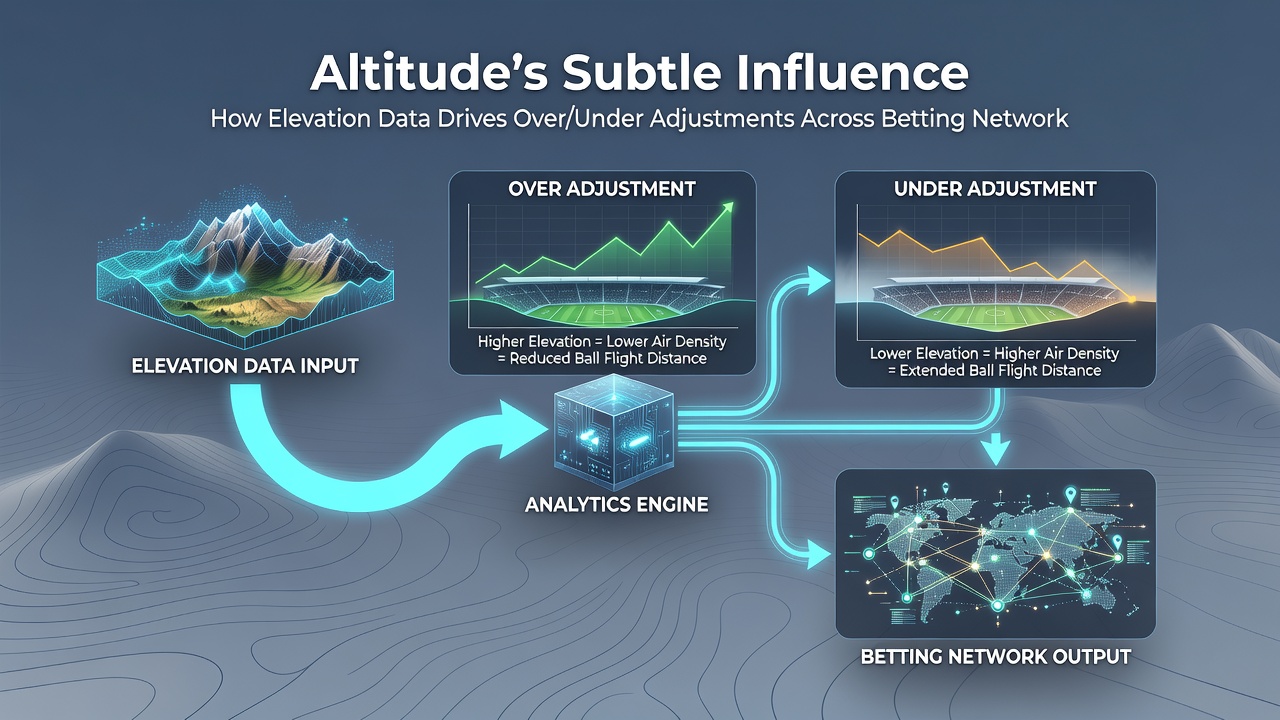
Data Integration Across Networks
Operators synchronize elevation inputs through shared weather and geospatial APIs that update every 15 minutes during active betting windows. When a line moves after a weather front alters humidity at a high-altitude stadium, every connected sportsbook receives the same revised coefficient within seconds, though some platforms apply additional filters based on their own historical hold percentages. This synchronization reduces arbitrage opportunities that previously arose when one network lagged behind another in altitude-adjusted modeling.
Academic studies published by the Australian Institute of Sport have quantified how acclimatization periods of 10 to 14 days can erase up to 60 percent of the altitude-related scoring advantage, and several networks now weight their models by each team's travel itinerary and training-camp locations. The result appears in tighter line spreads for squads that arrive early versus those that fly in the day before kickoff.
Regional Regulatory Context and Reporting Standards
Agencies such as the Alcohol and Gaming Commission of Ontario require operators to document the data sources behind any automated line adjustment that exceeds a predefined threshold, and similar transparency rules exist under the Australian Communications and Media Authority framework. These requirements ensure that elevation models remain auditable while still allowing networks to respond quickly to new measurements from stadium renovations or temporary venue changes.
One documented case involved a 2025 stadium retrofit in Mexico City that lowered the playing surface by eight feet; networks recalibrated totals within 48 hours after receiving updated elevation certificates, and subsequent scoring data aligned closely with the revised projections. Observers note that such rapid updates have become standard practice because the underlying geospatial datasets are now refreshed continuously rather than annually.
Conclusion
Elevation data now forms a core input layer for totals pricing across betting networks, with models that combine atmospheric physics, travel logistics and historical scoring trends to produce consistent adjustments at venues worldwide. As measurement precision improves and regulatory bodies maintain oversight of automated systems, the influence of altitude on over/under markets continues to evolve through incremental refinements rather than dramatic shifts.